%20rotate(-9.22)'/%3e%3c/g%3e%3cpath%20d='M283.5,1.46h64.63c39.36,0,62.2,16.52,62.2,44.95,0,21.38-12.63,33.53-32.07,37.66,22.6,2.92,38.15,14.82,38.15,39.12,0,29.64-23.32,48.35-65.12,48.35h-67.79V1.46ZM349.11,71.43c15.55,0,24.78-8.02,24.78-20.65s-8.99-20.65-24.78-20.65h-29.16v41.31h29.16ZM351.54,142.62c17.49,0,27.46-8.02,27.46-21.14,0-13.85-10.21-21.87-27.46-21.87h-31.59v43.01h31.59Z'/%3e%3cpath%20d='M437.24,1.46h36.45v138.74h67.55v31.34h-103.99V1.46Z'/%3e%3cpath%20d='M543.18,86.5c0-49.57,34.02-86.5,84.31-86.5s84.31,36.93,84.31,86.5-34.26,86.5-84.31,86.5-84.31-36.93-84.31-86.5ZM674.38,86.5c0-33.77-18.47-55.64-46.89-55.64s-47.14,21.87-47.14,55.64,18.46,55.64,47.14,55.64,46.89-21.87,46.89-55.64Z'/%3e%3cpath%20d='M763.56,84.55L710.83,1.46h43.25l33.04,53.94L821.63,1.46h40.58l-52.73,82.61,55.4,87.47h-43.49l-35.72-58.31-36.69,58.31h-40.82l55.4-86.98Z'/%3e%3cpath%20d='M879.94,1.46h36.45v68.27h67.55V1.46h36.45v170.08h-36.45v-70.22h-67.55v70.22h-36.45V1.46Z'/%3e%3cpath%20d='M1046.38,102.29V1.46h36.45v102.78c0,23.08,10.45,37.42,33.77,37.42s34.26-14.34,34.26-37.42V1.46h36.45v100.83c0,44.46-24.78,70.7-70.7,70.7s-70.22-26.24-70.22-70.7Z'/%3e%3cpath%20d='M1213.3,1.46h64.63c39.36,0,62.2,16.52,62.2,44.95,0,21.38-12.63,33.53-32.07,37.66,22.6,2.92,38.15,14.82,38.15,39.12,0,29.64-23.32,48.35-65.12,48.35h-67.79V1.46ZM1278.9,71.43c15.55,0,24.78-8.02,24.78-20.65s-8.99-20.65-24.78-20.65h-29.16v41.31h29.16ZM1281.33,142.62c17.49,0,27.46-8.02,27.46-21.14,0-13.85-10.21-21.87-27.46-21.87h-31.59v43.01h31.59Z'/%3e%3c/g%3e%3c/g%3e%3c/g%3e%3c/svg%3e)
Co-responsibility, in depth.
Why solving urban challenges takes more than solutions. Here you can find the research, conversations and publications shaping how BLOXHUB convenes it.
Start anywhere.
Each entry below is a way in. Skim the index, jump to the piece that matches the question you're sitting with.
Core principles of co-responsibility.
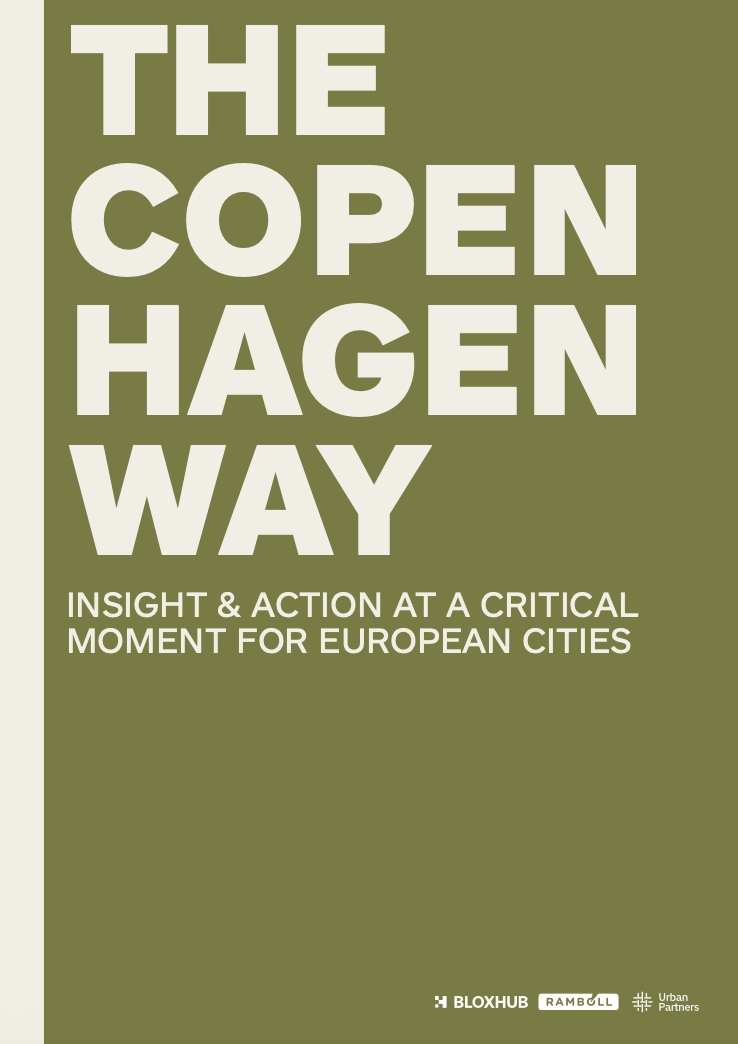
The Copenhagen Way
BLOXHUB's manifesto on why this is a critical moment for European cities — and why curated co-responsibility, not bigger toolkits, is the way through it.
- 01Europe's urban challenges are interlinked: climate, housing, inequality and trust cannot be solved in silos.
- 02Public, private, civic and academic actors must share risk and reward, not just the room.
- 03Co-responsibility is a designed condition — curated, facilitated, and held over time.
"We don't solve cities. We build the conditions where cities can solve themselves."
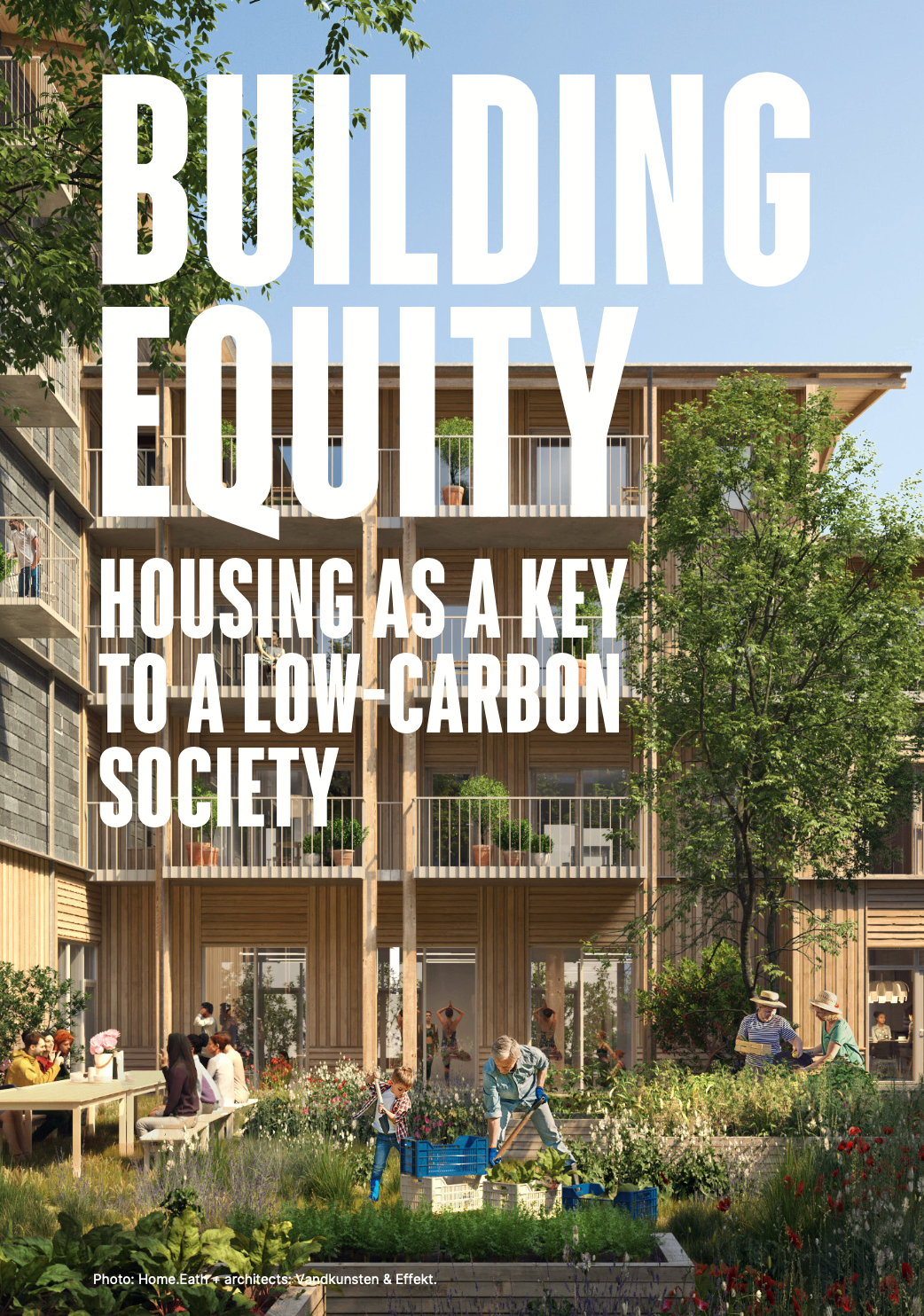
Building Equity
Housing as a key to a low-carbon society. A pan-European whitepaper convening industry, NGOs and policy on how to decarbonise the building stock without deepening the housing crisis.
- 0110.6% of Europeans in cities are overburdened by housing costs while the EU's carbon budget for buildings runs out within a decade.
- 02Decarbonisation and affordability are treated as competing agendas — they must be solved as one.
- 03New cross-sector alliances, investment structures and a human-rights frame can unlock industry innovation at the speed required.
"Climate, social and nature crises are all interwoven — and yet we pursue a strategy of silos."
The Right to Housing
Mazzucato and Farha's working paper for the Council on Urban Initiatives: realising the right to housing requires pairing legal accountability with mission-oriented economic policy.
- 01Housing is the foundational human right that unlocks health, education, security and participation — not a commodity.
- 02Human-rights accountability and mission-oriented policy reinforce each other: one sets the obligation, the other organises whole-of-government delivery.
- 03Governments must act as market-shapers — aligning finance, institutions and partnerships, including with the private sector, around the common good.
"The right to adequate housing… is the right to live in peace, security and dignity."
The Nordic Way
Ramboll's pathway for Helsinki, Stockholm, Oslo and Copenhagen to move from parallel city strategies to coordinated regional action — built on 103 senior leaders convened across the four capitals.
- 01Urban resilience is a decisive economic driver — associated with nearly one percentage point higher annual GDP growth.
- 02Adaptive governance, new public-private financing models and neighbourhood-scale placemaking are the three shared priorities across all four capitals.
- 03The greatest unrealised potential is formalised cross-border integration via the Y-corridor linking Oslo, Stockholm, Copenhagen, Helsinki and Hamburg.
"Cities can achieve systemic transformation within a single generation through aligned vision, trust, and cross-sector collaboration."
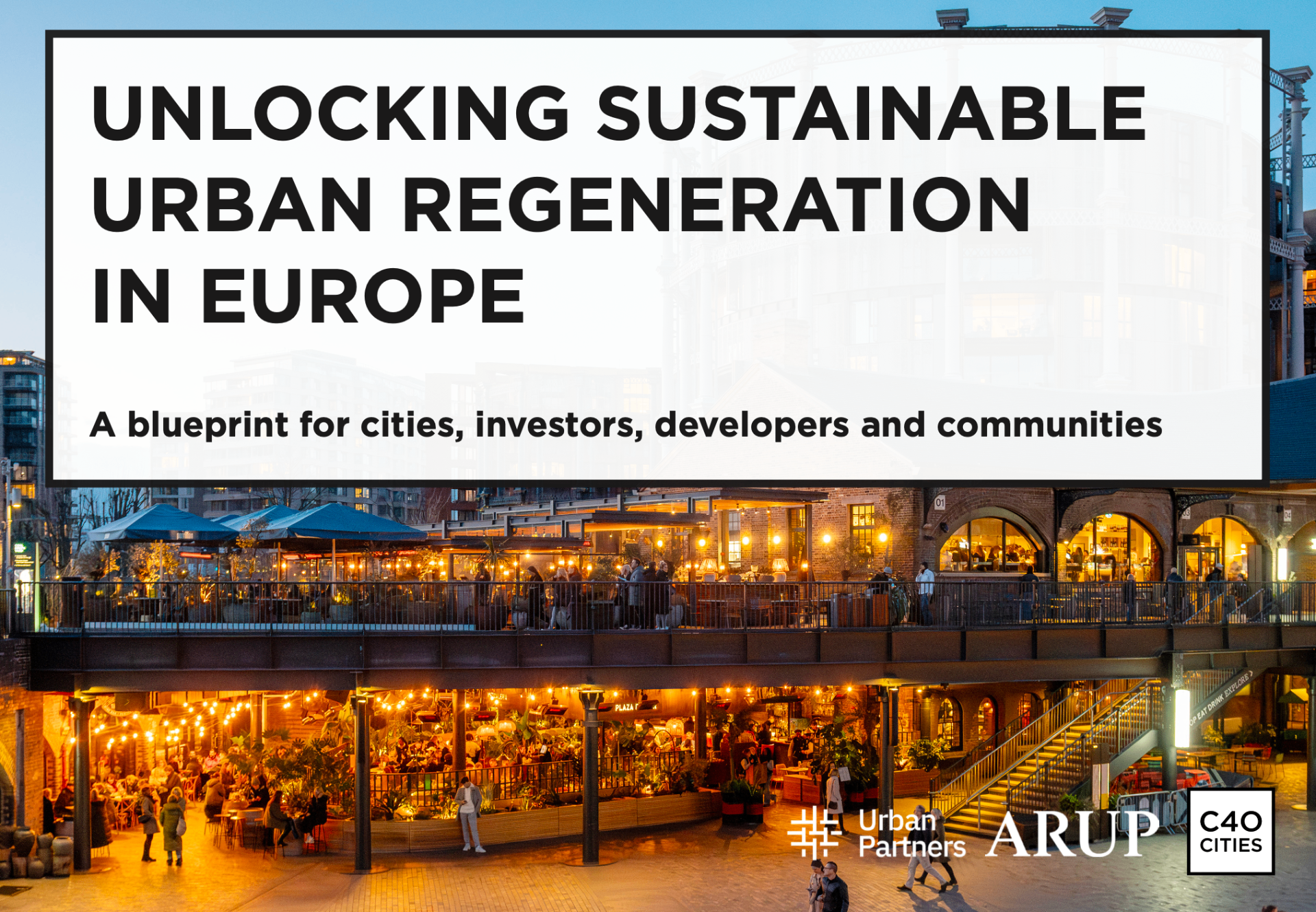
Unlocking Sustainable Urban Regeneration in Europe
A blueprint by C40 Cities, Arup and Urban Partners for cities, investors, developers and communities — making the case that brownfield regeneration is Europe's most decisive lever for climate, housing and economic renewal.
- 01Regenerating Europe's underused urban land could deliver millions of homes while cutting emissions versus greenfield sprawl.
- 02Cities, investors, developers and communities must align around shared blueprints — not parallel agendas — to unlock scale.
- 03Public-private-community partnerships are the missing infrastructure for moving regeneration from pilot to portfolio.
"Sustainable urban regeneration is Europe's most powerful, most overlooked climate and housing strategy."